
When Abundance Becomes the New Economy of Meaning
Isaac Arthur’s vision of a post-scarcity world imagines civilization not freed from economics, but reinventing it—where meaning, not material, becomes the ultimate currency.
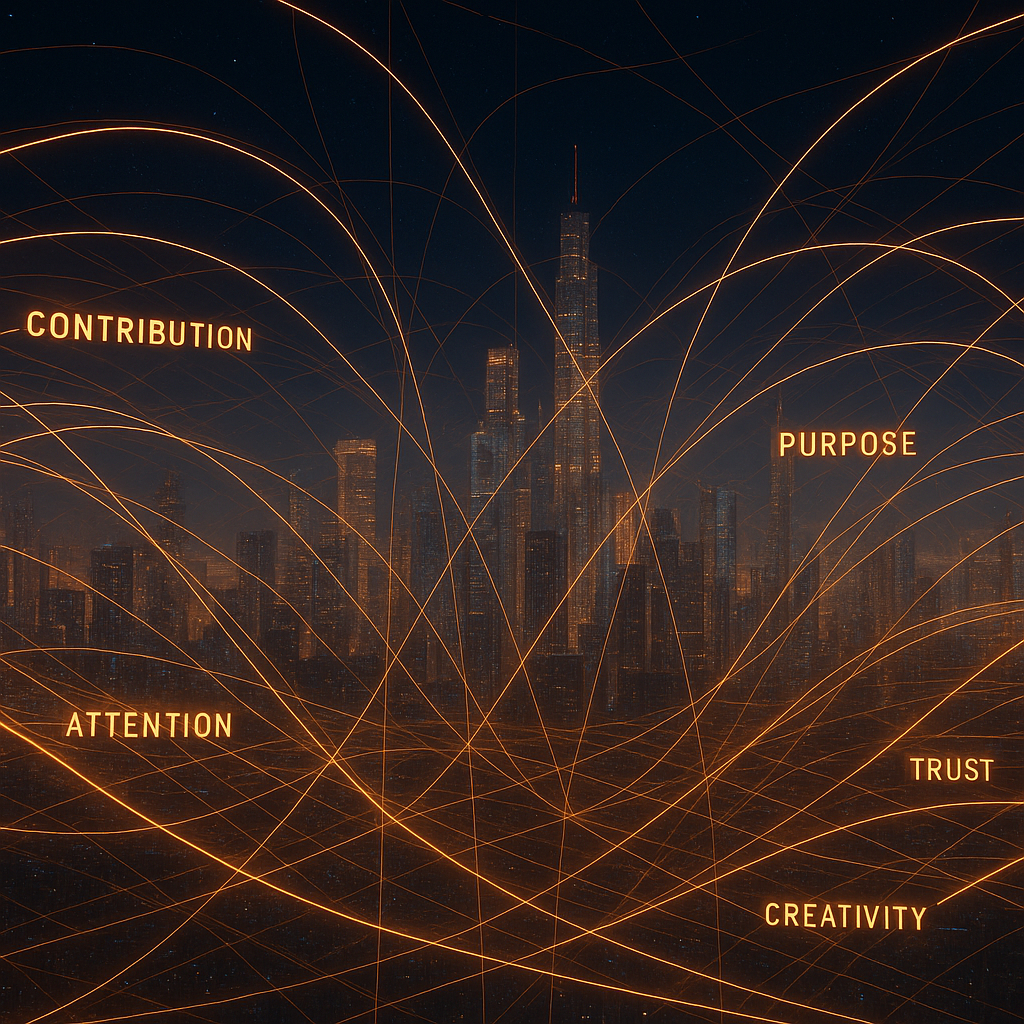
When Abundance Becomes the New Economy of Meaning
Isaac Arthur’s vision of a post-scarcity world imagines civilization not freed from economics, but reinventing it—where meaning, not material, becomes the ultimate currency.
In Isaac Arthur’s sweeping meditation on post-scarcity, he begins with a paradox: “Scarcity built our civilization. So what happens when it disappears?” The question sounds theoretical, but its shadow is already visible. Automation and clean energy are pushing the cost of production toward zero; AI models design, trade, and build at superhuman speed. The material horizon is widening—but so is the existential void beneath it.
Arthur insists post-scarcity “doesn’t mean utopia.” It means a civilization where survival and dignity are no longer uncertain, yet meaning becomes the rarest resource of all. Even if fusion power lights every home and food printers feed every child, people will still hunger for belonging, esteem, and purpose. The economics of need mutates into the economics of significance.
In that world, Arthur argues, “value stops being what’s rare and starts being what’s meaningful.” The shift is seismic. Markets no longer allocate apples and energy but experience and identity. A handmade poem, a live conversation, a once-in-a-lifetime discovery—these become the new luxuries. The price of participation is attention, and the yield is reputation.
Imagine a morning in 2035. Energy grids hum silently, powered by orbital fusion. Housing fabricators churn out architecture like coral growths. No one works to survive, but most still work. A woman curates planetary symphonies for the global network—not for pay, but prestige. A child spends the afternoon refining a coral genome in a digital lab because curiosity feels better than idleness. Their lives are not free of economics; they are entangled in a subtler one: the exchange of meaning for recognition.
Arthur warns that “attention might become the new currency,” creating an “algorithmic aristocracy.” He’s right to worry. When meaning becomes tradable, hierarchy re-emerges. The rich are no longer those who hoard gold but those who monopolize visibility. The same social media logic that gamifies likes could metastasize into civilization’s nervous system. A new scarcity—of genuine connection—could haunt abundance.
And yet, abundance also liberates. Freed from survival, work can evolve into self-authorship. “People need challenges,” Arthur notes, “we want purpose.” The next civic design challenge isn’t distributing wealth—it’s distributing wonder. Governments may guarantee basic income, but they’ll also need to guarantee meaningful outlets for mastery and contribution. Universities might become global playgrounds for curiosity. Cities might measure prosperity by collective fulfillment rather than output.
This is not unprecedented. Every technological leap—from the plow to the microchip—has forced humanity to revalue labor and leisure. The Industrial Revolution birthed both alienation and art. The digital one birthed both distraction and collaboration. The post-scarcity revolution will likely birth both apathy and awe, depending on how we architect incentives. A society of effortless abundance could still collapse under boredom if it fails to choreograph aspiration.
The solution may lie in what could be called “meaning markets.” Instead of paying for goods, citizens earn reputation tokens through creativity, teaching, or care work. These aren’t currencies in the old sense—they can’t buy food (that’s free)—but they can open access to opportunities, collaborations, or influence. Prestige replaces profit as the organizing principle. Contribution becomes currency.
Arthur reminds us that even in a world of infinite replication, some things remain stubbornly finite: space, time, and the self. “You cannot replicate a moment, relive a childhood, or fabricate a first impression.” Those irreplaceables are where economics will migrate next. The scarcity of presence, of authentic relationship, will define value far more than supply chains ever did.
Of course, abundance carries its failure modes. Arthur names them: apathy, gatekeeping, and optimization tyranny. When survival no longer disciplines us, we must invent new disciplines. The risk is not poverty but stagnation—a civilization so efficient it forgets why it exists. Economics survives not as math but as meaning: the moral calculus of how we spend our finite lives amid infinite possibility.
In the end, post-scarcity does not abolish the price of living well—it multiplies it across dimensions we barely understand. The coins of the next century will be reputation, curiosity, and care. The wealthiest will be those who give their attention most wisely. And the ultimate scarcity, as ever, will be time—the one resource no abundance can replace.
The future may master matter and energy, but the question “What matters most?” will remain priceless.
Sources
This article was assisted by AI and reviewed by an editor for accuracy and policy compliance.